Iceland: Week 26

Yesterday I went on a long walk through Reykjavík, from one side of the peninsula to the other, through the wooded area of Öskjuhlíð and along the thin walking path between the ocean and the airport. I needed sunshine, air, and movement. It was the last day, of the first month, of a new year that has been marked by turbulence and uncertainty. Full moon tonight, so at least the celestial bodies are still reliable and trustworthy. At rock bottom, we can count on that.


I went to two separate talks about Greenland this week, one of them hosted by the Institute of International Affairs and the other by the Political Science Association. The latter included Karsten Peter Jensen, Head of Representation for Greenland in Reykjavík, whom I saw speak last week at the protest. I learned that his title can not be “ambassador” since Denmark retains control of foreign policy for Greenland.

Each of the talks was interesting, highlighting the absurdity of Tump’s threats, the lack of Chinese presence or investment in Greenland, and the interests and desires of the Greenlandic people. But they also both lacked any additional information about the true intentions of the American administration or the elements that might be part of a “framework of a deal” that supposedly emerged at Davos. We are still at a stage of speculation.

The first talk did engage in motivational theories, drawing a connection between Trump’s aggression and the long-standing interest by Elon Musk of having a SpaceX presence in Greenland. I don’t know. I hate Elon more than most, and have been tracking the massive corruption throughout Trump’s second term closely, but I’m not convinced that Trump’s actions towards Greenland can be explained so rationally. Increasingly, I think we have to move beyond logic in analyzing him — fewer foreign policy experts, more psychologists and therapists trained in narcissistic and abusive relationships. There are things he does for corruption, and there are things he does purely for ego, power, and punishment.


While reading an incredible detailed blog post about techniques for improving an image-to-ASCII renderer I stumbled upon an equally in-depth project by the same author about Icelandic declension, where noun forms change to communicate a syntactic function. The author of both, Alex Harri Jónsson, created a software package that would make it easier to properly represent the four different grammatical cases of Icelandic nouns. I had never considered the complexity of this before, but when an Icelandic person lists their personal details in a website or database, they provide only the normative version of their name. So if a website or app inserts their name into a sentence, it’s often the wrong variant, since the sentence structure determines the proper variant.

His post is a fascinating explainer for how this works grammatically, but also how he built an incredibly efficient JavaScript library to help programmers properly handle Icelandic names. This was partially possible because of Iceland’s Personal Names Register, which I’ve mentioned here before, that includes a record of all approved Icelandic names. One of the criteria that factors into approval is whether or not it can accommodate this grammatical declension.

Weekly Email Updates

Get a single email each week with any new blog posts.

Just one email a week if there are new posts. Also, there's an RSS feed.

Iceland: Week 25

I’m struggling with being in Iceland, while watching the state terror that is happening in Minneapolis and across the USA. It doesn’t make me feel safe to be so far away, it makes me feel helpless. Yesterday’s murder of Alex Pretti followed the same playbook as that of Renee Good: immediate lies from Kristi Noem and other administration officials demanding that we not believe our own eyes.

This lying is vile, but it is also weak. When your power is based only upon coercion, when you believe that you can force people (or countries) into submission, you project your fragility for all to see. Your power relies on compliance, fear, and isolation; on a calculation that the other party lacks resources or alternatives. You are betting it all, and thus stand to lose it all.

On Tuesday, Mark Carney, Prime Minister of Canada, gave a moment-defining speech at the World Economic Forum in Davos in which he called on other nations to reject the aggressive logic of great power rivalry (full transcript). It’s strange for me, having spent the Fall diving deep into theories of international relations, to see so many quotations of Thucydides: “the strong can do what they can, and the weak must suffer what they must.”

In his speech, Carney rejects that Realist logic by noting that “there is a strong tendency for countries to go along to get along. To accommodate. To avoid trouble. To hope that compliance will buy safety. It won’t.” The first couple minutes of Carney’s speech were in French, and the final line of that portion translates to: “The power of the less powerful begins with honesty.

I think his speech was incredibly impactful because it speaks not just to international relations or global trade agreements. His advice to the leaders of middle-power countries is equally valid for citizens of the United States facing the dissolution of our constitutional rights through force and lies. Compliance won’t buy safety. Power begins with honesty.

If you voted for Trump, there are hundreds of other lines crossed that could have prompted a deep reflection, but this should be the last. Look into your heart and ask yourself if these acts of violence align with your values. It’s okay to admit you were wrong, that you were lied to. But this week was a breaking point that forces a decision — whether as the leader of another country or a citizen of the USA. You can stand with your neighbors against tyranny, exposing the weakness of a bully when measured against a unified opposition, or you can take the side of dishonesty, corruption, and state violence. Silence in this moment is support for tyranny. Compliance won’t buy safety.


On Tuesday I participated in a candlelight vigil for victims of ICE, which was held in downtown Reykjavík by Indivisible Iceland. The event included a reading of victim’s names who have been directly murdered by ICE or died in detention. It was a small group of mostly Americans, but the vigil was covered by RÚV, the national broadcaster, as well as Vísir. Those links are in Icelandic, but include some video of the event, including me sharing a reflection. If nothing else it was good to meet other Americans in Iceland who are struggling with what ICE is doing and looking to express solidarity however they can.

On Saturday I attended a “Stand with Greenland!” rally outside of the Greenlandic embassy in Reykjavík, which was convened to disavow American bullying tactics and aggression towards the country. Although Trump has backed down from his threats to use military force to “take” Greenland there are still no clear details on his “framework of a deal” with NATO allies and he continues to disrespect Greenlander’s sovereignty in his rhetoric. I have more photos of the event in an Instagram set.

It was bizarre to watch Trump’s speech in Davos this week as he continued to belligerently say that American deserves to “own” Greenland, and yet multiple times mistakenly refer to it as Iceland. Of course, in line with the administration’s broader inability to ever admit a mistake, they denied that he said Iceland — even though we can all watch the video. There’s a reason this George Orwell quote from 1984 is making the rounds this week: “The Party told you to reject the evidence of your eyes and ears. It was their final, most essential command.”


Iceland has a very centralized government information system at island.is where after you log in with your kennitala (like a social security number) you can view and manage everything from your home address, marriage status, vehicle registration, health insurance, petitions, and much more. As a temporary resident I don’t have a ton of reasons to use it, but this week I logged in to verify that I’ve reached my 6-month threshold and now have Icelandic Health Insurance.

Iceland: Week 24

I guess it’s only been a week since I returned to Iceland after my trip to the US for the holidays, but so far, every day of 2026 feels like at least a week on its own. I started my new semester at the University of Iceland on Monday, so I’ve been wrapping my head around five new classes alongside keeping up with the chaos of ICE raids in Minnesota and Trump getting aggressive about his nonsensical desire to “take” Greenland. It’s been a lot.


When I first started exploring the possibility of studying in Iceland, I was interested in the Arctic Studies micro-credential, a one-semester (30 ECTS) program. But when I went to apply I learned that micro-credentials are no longer offered to international students. My alternative was to apply for the one-year International Affairs Master’s level certificate (60 ECTS), which allowed me to structure the first semester to match exactly the Arctic Studies program. It also allowed me to stay in Iceland longer, so it seemed like a good option.

Now that I’ve completed the Arctic Studies portion of the degree, my classes this semester are less specialized. I’m optimistic that I’ll still find them interesting, but to be honest, my motivation is nowhere near as high as last semester. This overall experience has always been driven by a mix of interest in the academic program a desire to live in Iceland—the weight is now shifting to the latter. My courses this semester are: Negotiations, The Role and Policymaking of International Institutions, Governance of the Internet, Practical Statistics, and Introduction to Security Studies.

During the holiday break I found time to publish the Arctic-related papers I wrote last semester on my Looking North blog, where I’ve been writing since 2019 about landscapes and cultures of northern places. I hadn’t published anything there in a couple of years, and these latest essays are much more in-depth than what came before. I’m not sure if I’ll pick up the pace of publishing on Looking North or not, but between this blog and there it seemed like the more appropriate venue. The two essays are:

  1. Arctic Fiber Frontiers — How are subsea cable networks reshaping sovereignty and geopolitical power in the Arctic?
  2. America’s Arctic Imaginaries — What does the controversy over drilling in Alaska’s Arctic National Wildlife Refuge reveal about competing American visions of the Arctic?

Both are topics I was excited to dig into and learn more about, and I’m happy with the outcome. While written in an academic context I think they’re very accessible, so if you’re interested at all I hope you’ll check them out.


During Christmastime, Icelandic graveyards are full of candles. This is the post-holiday candleholder discard pile.
From a wrapper on some scaffolding downtown Reykjavík that highlights the history of what used to exist at that location. This is the first evidence I’ve ever seen that Iceland had a pneumatic postal service.
This was the strongest aurora I’ve seen yet, and the way it swirled around Mt. Esja was otherworldly.

Back to the chaos of Trump’s threats to the international rules-based order—I would say that people in Iceland are starting to wake up. Iceland and the US have had a co-dependent and beneficial relationship since WWII, but these belligerent statements about taking over Greenland have people worried that the same logic could be applied to Iceland. It doesn’t help that Billy Long, Trump’s nominee to be the US ambassador to Iceland, joked this week that Iceland will be the 52nd state and he’ll be governor. This led to a petition, which I signed, for the Prime Minister of Iceland to reject his ambassadorship. Long has since apologized, but only in the classic non-apologetic move of saying he was sorry, “if anyone took offense.”

Meanwhile, the stories and videos of ICE acting as an unaccountable, hateful, dehumanizing paramilitary force continue to stream out of the Twin Cities. Just as we saw in Chicago and Portland, I’m proud of the Minnesota resistance I see from afar, of people standing up for their neighbors, documenting these illegal actions, and even bringing whimsey and joy in the face of terror. Yesterday, a January 6th insurrectionist Nazi tried to inflame tensions in Minneapolis with a hateful rally downtown and protestors ran him out of the city. I find it hopeful to see that people are not backing down in the face of fascism, but I’m incredibly worried about how Trump will continue to escalate. He wants chaos; he wants to invoke the Insurrection Act. The latest I’m reading today is that they’re planning to deploy 1,500 paratroopers to Minneapolis. This is insane.

Here in Reykjavík, a group that I joined late last year called Indivisible Iceland is planning a vigil for Renee Good and all victims of ICE on Tuesday, January 20th.

Noted & Done

  • I finally had an Icelandic celebrity sighting at the pool. Ingvar Sigurdsson was leaving just as I was arriving.
  • The post-solstice daylight situation is improving rapidly. Today the sun sets at 4:29PM, only 19 minutes earlier than Chicago. I’m tired of the dark, but I’ve also been really appreciating the sunsets lately, knowing that at some point I won’t see them anymore.
  • This article in the Guardian about losing our connection the future due to the ongoing polycrisis is something I’ll be thinking about for a while. In particular, the idea that we “don’t really think about our future — we remember it…when we daydream or envision ourselves at a later point, we essentially create a memory. We then use these memories to construct our ideas about the future.”
  • Marcin Wichary compiled a fantastic list of his favorite tech museums around the world. I’ve only been to one of these (The Connections Museum in Seattle) so I’ll be referencing this list on future trips.
  • I used an eSIM from Airalo when I was in the US and it was a great experience. iPhones can support multiple active eSIMs, so it got me thinking about other use cases. For example, even if you already have an active plan, you could get an eSIM that operates on a different carrier network to act as a backup in areas of spotty coverage. I think I’ll do this the next time I’m on a long US-based roadtrip through areas with poor coverage.
  • If you use Gmail, you should know that Google has by default given its Gemini AI access to your inbox to enable “smart” features. Here are the instructions for how to turn it off.

This is America

I welcomed the new year in the USA, where I spent three weeks celebrating the holidays and visiting friends and family. But alongside those moments of reconnection I also got to see Trump’s America up close again, having spent nearly half of his second administration at a safe distance, on a remote island in the North Atlantic. I follow the news closely, of course, but the maddening, saddening, reality hits harder with a front row seat.

After months of listening to the fight over ACA subsidies, I had my own quirky run-in with the broken healthcare system. I don’t have a health insurance policy right now, so I tried to buy one for this trip. There are policies intended for expats living permanently abroad, who are traveling back to the US, but not for temporary residents like me. I called numerous companies, but when I described my situation they all told me I wasn’t eligible, so I crossed my fingers and went without. When I got to Michigan I asked at Walgreens how much it would cost to get a flu and COVID vaccine — $240 — which seemed exorbitant to me. Unfortunately, my parents were dealing with norovirus as I arrived, and then later in the week we all got COVID. The vaccine might have been too late anyway, but in hindsight the cost would have been worth seeing friends instead of spending a week in my parents basement. While I was recovering, RFK’s CDC changed their guidance to say children shouldn’t get COVID vaccines.

My parent’s bird feeder, in Sturgis, MI

On January 3rd, I woke up to the news that the US had invaded Venezuela. Like Chekhov’s gun, all those naval vessels off the country’s coast had to play their role at some point. It was shocking to see the U.S. disregard a nation’s sovereignty in such a cavalier manner. Within hours the flimsy pretense about drugs was abandoned and Trump was stating clearly that this was done for oil money. In the days that followed the rhetoric about taking Greenland ramped up. My semester spent on Arctic Studies is uncomfortably relevant to this geopolitical moment, while my class that starts tomorrow on “The Role and Policymaking of International Institutions” is uncomfortably irrelevant, given that Trump just pulled the U.S. out of 66 international organizations.

On January 6th, I was in Chicago, walking around a city I love, eating great food and visiting friends. But this was also the five-year anniversary of the insurrectionist attack on the U.S. Capitol, the first since Trump pardoned nearly 1,600 people convicted or awaiting trial for their seditious and violent actions that day. I couldn’t help but think about how those criminals must be holding parties to celebrate that injustice, as I walked along the Chicago River in the shadow of the massive, ugly tower that bears Trump’s name in 20-foot letters. The “big lie” of the 2020 election has become a series of ongoing lies that try to rewrite much of the country’s history.

An orange line “El” train, rounding the a corner in the loop
Marina City, shot from an angle that avoids having Trump Tower in the frame.

The next day, on January 7th, I flew to Minneapolis to visit Emoji. I saw someone on social media say that these days “all dogs are therapy dogs” and there is nothing more true. He’s helped me get through a lot and I miss him terribly. To anyone in Minneapolis that is surprised to hear I was there, I’m sorry I didn’t get in touch. This trip needed to be 100% Emoji time.

Me and Emoji 💙

As my flight was taking off, I learned the news the Renee Good was murdered by ICE. Later that day I saw the videos that we’ve all seen, and the next day the lies from the administration began about what we could all verify with our own eyes: ICE is a rampaging paramilitary force that is allowed to act with impunity. They are staffed exclusively by bullies — the kind of people that most of us know and avoid — with hair-trigger tempers, superiority complexes, and deep-seated emotional problems. They’ve given them guns and told them they have immunity. I am crushed by this killing, but even more disturbed by the immediate attempts to demonize the victim. Minneapolis Public Schools were closed for the rest of my time in the city: the children are not safe from their government.

I went to Renee’s memorial, which was surreal to see after watching the videos so many times. It was part vigil, part protest, chaotic with the presence of police on a street that should have just been closed. It was emotional to be there, from the weight of this senseless act and for what it says about America today. But the community was standing together; an artist was painting a large portrait of Renee, a woman was handing out Somali sambusas.

The memorial to Renee Good.
An artist paints a portrait of Renee Good, near the scene where she was murdered by ICE.
Look at the size of those billy clubs.

I got back to Iceland yesterday and my body still isn’t sure what time it is, but it’s good to be somewhere quieter, and beautiful. Being back in the U.S. for a few weeks made me miss my people there, miss my dog, and feel the weight of this moment more deeply than I had been. I have not given up hope, but the refrain in the many discussions I had seemed to always be that it’s going to get worse before it gets better. I hope we can build solidarity and strength fast enough to counter the forces that are seeking to destroy everything. I still believe we can, and I still believe that these displays of violence and wanton power are actually signs of weakness. But this is not an easy moment, and the path forward is still beyond the horizon.

Iceland: Weeks 21 + 22

This is my first Iceland post that needed to span multiple weeks. In the previous fortnight I wrapped up everything for my first semester at the University of Iceland and my brother visited for five days. It was really fun to have him here, his first time in Iceland, and despite the very minimal amount of sunlight (~3.5 hours per day) we had a great time exploring the Reykjanes Peninsula and south coast.

When I met Isaiah at the airport, at a little past 7am, we still had at least 3 hours before the sun would start peeking above the horizon, so we caught up in a cafe before heading out. Iceland immediately showed off its weather diversity as we drove from drizzly Keflavík through the snow-covered lava fields of Reykjanes. The first stop was more of a conceptual one, but established the mind-blowing geological newness that is Iceland: a bridge between continents that connects the Eurasian and North American tectonic plates. The country is basically split in two by these plates, the source of volcanic activity that led to the creation of Iceland 20 million years ago and all the continued eruptions today.

Bridge between the Eurasian and North American tectonic plates

Near there is Gunnuhver, a geothermal area, where the mixture of snow, steam, and sunrise seemed like a fitting introduction to Iceland.

Gunnuhver geothermal area
Isaiah at the Gunnuhver geothermal area
A graveyard along the Reykjanes southern coast. During Christmas cemeteries in Iceland are lit up like this.

This time of year the sun never really stops rising or setting, but by the time we arrived in Grindavík it was light enough to see the impact of the nine dramatic eruptions that caused the town’s 3,700 residents to flee in 2023. The town is surrounded by newly constructed lava barriers, and in the city center there’s a fissure that cracked and shifted the street by a meter or more. New roads have been cut through the lava, and there are signs of rebuilding, but most residents haven’t yet moved back.

A new road cut through the lava field, seen from the top of a lava barrier.
Isaiah on a lava field from the 2023 eruptions.

Our next stop was Hveragerði, where we hiked into the mountains to the Reykjadalur thermal river. The sun had already started to set when we started around 2:30pm, so we packed headlamps for the walk back. That was smart, but it would have been even smarter for us to not leave our crampons in the car. The ~5 mile round-trip hike was icier than we anticipated, but beautiful, and soaking in the hot springs surrounded by snow covered mountains felt amazing.

The view over the geothermal valley
Reykjadalur hike
Reykjadalur hot springs area. This is the main site for soaking, with a boardwalk and minimal changing zones.

We stayed in Reykjavík that first night, and the next morning made headway down the south coast before sunrise so we could maximize the minimal daylight. The weather was cooperative throughout the trip, with very little rain or snow. The temperature was moderate, mostly just above freezing, but the wind got up to 40 mph. At times, it felt like pushing on a heavy door just to walk forward and twice it literally knocked me to my knees.

The south coast did not disappoint, and it’s truly the biggest payoff for a limited amount of time in Iceland. It’s amazing how many things are just off the ring road, and while these accessible sites are busy with tourists, even in winter, it wasn’t overwhelming. We went to Seljalandsfoss, Skógafoss, Sólheimajökull, and Reynisfjara before running out of daylight in Vík, and continuing the drive to our hotel in Hof.

For this first day, I have photosets on Instagram of horses, Sólheimajökull, and Reynisfjara.

A herd of Icelandic horses congregated along the road and were happy to see us. I love how they are so genetically specific and yet each one has such a distinctive look.
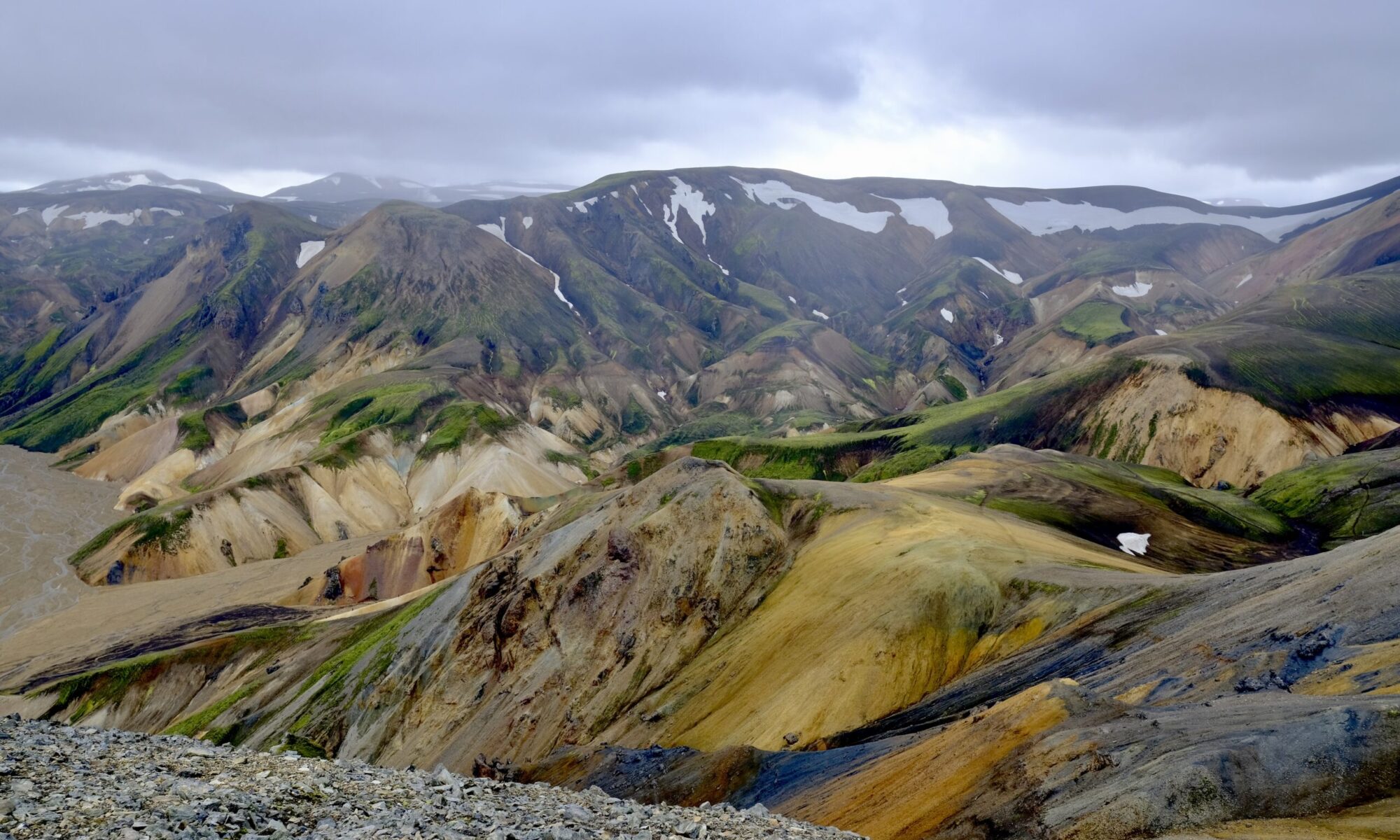
The Eyjafjallajökull icecap, underneath is the volcano that erupted in 2010 and caused 20 countries to close their airspace.
Obligatory waterfall selfie. Unfortunately, this time of year they don’t let you go behind Seljalandsfoss due to icy conditions.
Sólheimajökull glacier, which I went ice climbing on just a month previous. It was fun to come back so soon and see the changes in the icebergs and lagoon.
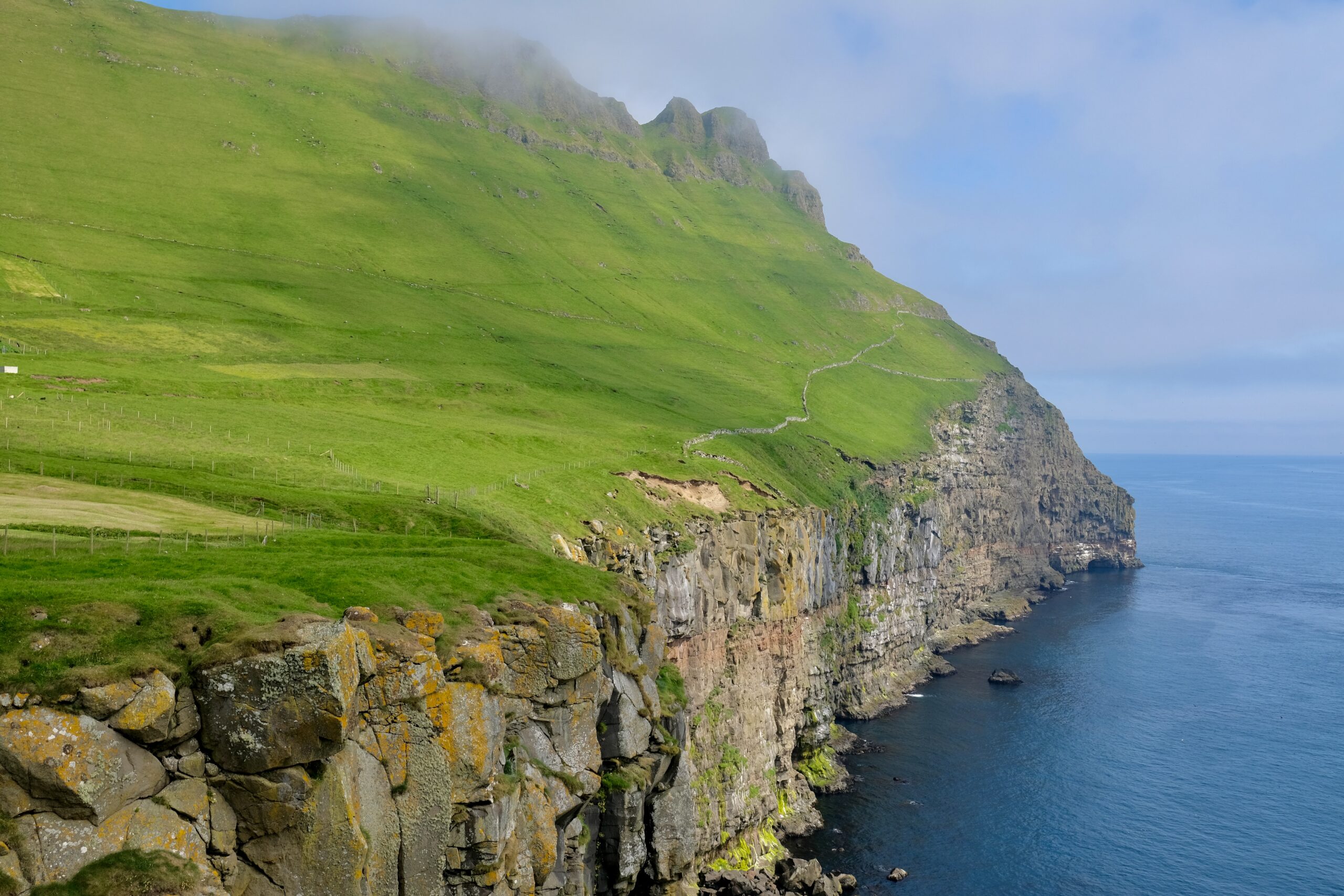
I brought my other camera lens (50–200mm) along for this trip to Sólheimajökull, which let me capture slightly different views of the glacier than when I was there previously with only my 23mm.
This ice arch is an example of something that I didn’t see last month, and it probably won’t be there a month from now.
Very rough seas and intense wind at Reynisfjara, the black sand beach.
Basalt pillars on the Hálsanefshellir cave.
Black sand beach with Dyrhólaey in the distance.

At sunrise the next morning we went to the Jökulsárlón glacier lagoon and Diamond Beach, where icebergs calve off the glacier and float out to the sea, washing up on the black sand. It’s a stunning place, with bright blue ice that feels surreal amid the immensity of the Vatnajökull ice gap. I have a photoset on Instagram with more images.
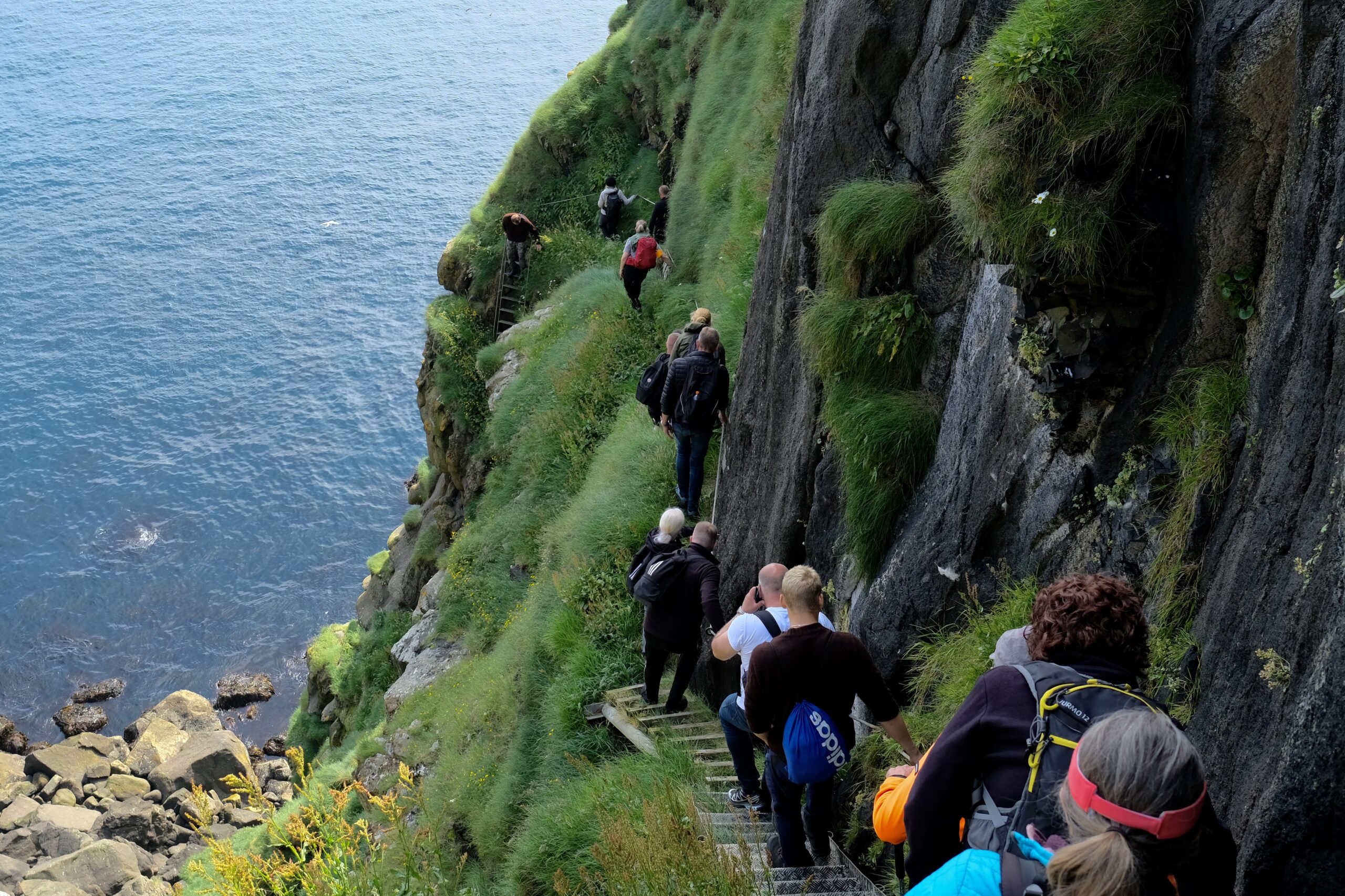
An iceberg just off shore that hadn’t been washed onto the beach yet. I saw a photo someone took two days after this that looked like it had broken in two, with a large piece on the sand.
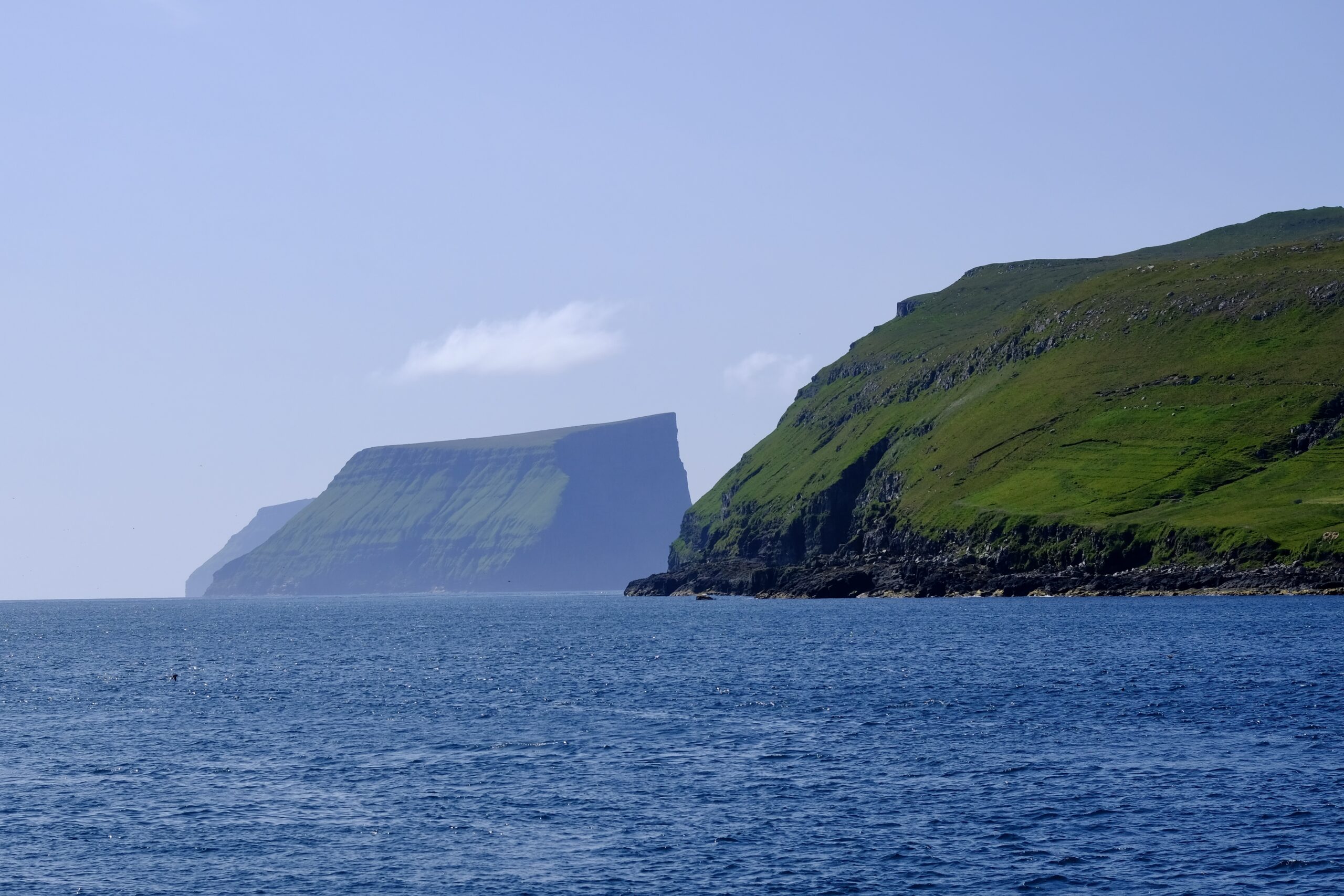
Ice chunk on Diamond Beach in pre-dawn light.
Jökulsárlón glacier lagoon

Perhaps the most unexpected experience was going to the Fjallsárlón glacier lagoon and realizing it was frozen solid. The Jökulsárlón lagoon doesn’t freeze in winter, because it mixes with salt water from the ocean, so after cresting the hill that reveals Fjallsárlón it was almost hard to process what we were seeing: massive icebergs, frozen in place, with people walking amongst them.

It’s pretty amazing that in a short two-day trip we were able to visit three different outlet glaciers. Whether it’s winter or not, my top tip for the south coast of Iceland is to not miss Fjallsárlón, if you are going all the way to Jökulsárlón. It’s only 15 minutes west and an equally wonderful experience. I also have a separate photoset of Fjallsárlón on Instagram.

A frozen glacier lagoon at Fjallsárlón
The Fjallsárlón glacier
A blue-ice arch in and iceberg at the Fjallsárlón glacier lagoon

The final stop on our south coast tour was Fjaðrárgljúfur canyon, where a winding river has cut a scenic path. I somewhat sheepishly realized that I first learned about this place because it’s the splash screen on my banking app, which feels like finding out about national parks from MacOS wallpaper. But it’s a beautiful spot, and definitely worth the hour or so if you have the time (and daylight) to spare.

Fjaðrárgljúfur canyon

I have lots more photos, but this post is already very long. Overall, it was great to have Isaiah visit and nice to see spots on the south coast that I hadn’t yet visited during this time in Iceland. I went as far east as I’ve ever been, but no further. This Spring I’m hoping to break that barrier and make it all the way to the Eastfjords.

Outside of our roadtrip we walked around Reykjavík, which made me realize just how small it is. By day two of exploring the city we had gone to 80% of the areas I frequent, ate well, and avoided spending too much time in my tiny studio apartment. It’s always interesting to wander around a city with Isaiah because as an architect he sees things in the built environment that I don’t. We have similar but different designer afflictions: I spot the bad kerning on signs, he notices when courtyards don’t align. But he also looks up who designed the buildings, so now I realize that every day I walk by three or four buildings by Guðjón Samúelsson.


I’ll be traveling to the U.S. for the holidays, my first time leaving Iceland since I arrived in mid-July. I realized this week that my time here matches my longest living out of the country; I was in India during 2011 for the exact same time period. I’ll be in the States for three weeks, returning just before the next semester starts on January 12th. I’m probably going to take a break from writing here during that time. Happy new year to everyone that’s been reading this blog. I appreciate hearing from you, thank you for following along.

Noted & Done

  • Iceland will not take part in next year’s Eurovision, in protest of Israel’s participation.
  • UNESCO has added Icelandic swimming pool culture to its list of intangible cultural heritage of humanity.
  • Icelandic sculptor Steinunn Thórarinsdóttir did a talk at Scandinavia House in NYC last month and the video is now online.
  • Finished Shetland season 10, which was very much like every other season but that’s fine with me. I watch it as much for the landscapes as I do for the plot.
  • Finished my two research papers and will heartily recommend Zotero for managing sources, notes, and most of all footnotes. I honestly don’t know how I would have managed my footnotes and bibliography formatting without this tool. One of those pieces of software that you immediately can not imagine living without.

Iceland: Week 20

My exams are done and my papers are getting very close. The last few weeks have been a big push to wrap up the semester but it looks like I’m on track to finish before my brother comes to Iceland this week. I’m excited to have him visit!


I finished watching a four-part mini-series about the life of Vigdís Finnbogadóttir, the former Icelandic president, which is streaming on RÚV with English subtitles. The show, which shares production and acting credits with the excellent Blackport, was really well done — and I’m getting good about recognizing filming locations in Reykjavík. Elected in 1980, Vigdís was the world’s first female head of state and in Iceland she was the first single woman allowed to adopt a child. I enjoyed getting more of her backstory since I see references to her all over town. For example, my oral exam for my class in Iceland’s Foreign Policy was held in a building on campus called Veröld – House of Vigdís.


Last night I saw Júlía Mogensen perform at Mengi and got to see a halldorophone being played for the first time. It’s a unique electroacoustic instrument that looks like a cello but incorporates positive feedback into the process of playing. It’s the brainchild of Halldór Úlfarsson, who takes an iterative approach to design, incorporating feedback from musicians and evolving it over time. I’ve been really enjoying the album Electroacoustic Works For Halldorophone by Martina Bertoni lately, so it was great to see it being played and get a better sense for how it works.

Júlía Mogensen playing a halldorophone at Mengi.

Noted & Done

Iceland: Week 19

This was the main study week for my Theories of International Relations exam. I did a deep dive on four theories and packed my days by re-reading and quizzing myself to try and keep all the nuances straight. I’m covering Realism, Liberalism, Marxism, and Normative IR — including all the sub-theories and critiques within each one. The overlapping terminology can be tricky, with maybe a dozen different meanings of the word “liberal,” a half dozen variations on “hegemony.” It’s maddening that the mix of authors I’m trying to keep straight include Walt, Waltz, Walzer, and Wallerstein.


Photos from Ragnar Axelsson’s current show at Qerndu gallery

I did get out to an opening at Qerndu gallery for Ragnar Axelsson’s latest photography exhibition: Human. The ten photos in the show were previously selected for the 2023 Prix Pictet photography award for global sustainability, and feature people from Greenland, Siberia, and Iceland. Ragnar’s work is primarily focused on documenting the changing Arctic, from melting glaciers to people’s lives and culture. His book Faces of the North, one of my favorites, combines candid photographs and portraits with short stories about each person. I wrote about it on my Looking North blog back in 2020. He’s one of my favorite photographers, so I was pretty excited for the chance to meet him and see his work at full scale.


Christmas Cat in downtown Reykjavík

With Christmas season approaching, the city of Reykjavík has put up some sculptures in the center of town depicting Icelandic Christmas folklore such as the Christmas Cat and Yule Lads. I’m familiar with the less-than-happy endings of most Icelandic novels and movies, so I shouldn’t be surprised — but these stories are dark! Christmas Cat lurks around the countryside and eats people who have not received new clothes to wear for Christmas Eve. Yule Lads are a gang of 13 mischievous pranksters who steal from or harass people in different ways. Their mother’s favorite food is a stew made of naughty children.

That said, the Yule Lads also seem pretty funny. They have names that translate to things like Door Slammer, Sausage Swiper, and Doorway Sniffer. My favorite — the one I would choose to play in some kind of Icelandic Christmas pagent —  is Skyr Gobbler. He just really likes Icelandic yogurt.


Finally, here are a couple of photos I took recently where the sharp angle of the sunset created interesting illusions. In the first, a focused beam of warm light hits only a sliver of Mount Esja, making it look like the lights from a town are illuminating the base of the mountain.

The second is from the University of Iceland campus, where steam from the hot river is illuminated by sunset light compressed between an opening in the buildings. Combined with the almost black-and-white, frost-covered ground it looks like an explosion.

Iceland: Week 18

It was strange and delightful for my social feeds this week to be filled with aurora from all over the United States! It seems that many of you got a better show than what I typically see in Iceland. That same solar storm showed up here too, but unfortunately not until the middle of the night, so I missed it.


This was my last week of classes for the semester and now I’m in a bit of a crunch mode as I study for two exams and write two research papers. This led me to realize how long it’s been since I took a test, which then made me feel old. I had to take the GRE for my application to Carnegie Mellon, but that was 20 years ago and my Masters in Interaction Design was entirely project and thesis-based. Which means my last time taking a test for a class was at Western Michigan in the late ’90s.

I have two exams to prepare for, both of which are formats I’ve never experienced before. My Theories of International Relations class is a 3-hour, closed book, essay-driven exam — four questions, four essays. Whereas my class on Iceland’s Foreign Policy is an oral exam, where I’ll pick a topic out of a hat and speak on it for 15 minutes. My class on Leadership in Small States had writing assignments every week, which were compiled and handed in instead of an exam.

The research papers are for my Arctic classes. Each are 5,000 words and framed around questions of my own choosing:


I shouldn’t be surprised, but this week I saw that Russ Vought has a new tactic to shutter the CFPB for good. It’s based on a bad-faith reading of the language in the Dodd-Frank Act that describes how the agency should be funded. The language in question directs the CFPB budget to come from the “combined earnings of the Federal Reserve System,” and Vought wants to interpret earnings to mean “profit” instead of “revenue.” They see this as some kind of genius move where they can redefine these terms and — proof! — CFPB has no budget and has to shut down, without Congressional approval. It’s not a new idea, they tried to kill the CFPB in 2024 with the same tactic. But back then the Bureau could fight back, whereas now it’s a self-inflicted blow by a criminal executive intent on destroying anything that actually helps people.

I know that CFPB is already effectively dead; every one of my colleagues has been fired or retired. But still, maintaining even the shell of an agency might have helped it come back to life under a new administration. Almost every week I read an article about some issue where people are hurting, that mentions how there’s nobody left to help now that the CFPB has been shuttered. Most recently it was this story in Bloomberg about zombie second mortgages, a topic that was getting a lot of scrutiny last year at CFPB.

Iceland: Week 17

I finally got to walk on a glacier. I’ve seen them from a distance when hiking alongside their imposing presence on the Laugavegur trail, and up close on a boat to the calving front in the Jökulsárlón glacial lagoon. I have memories of a planned glacier walk in Alaska that was scrapped when I was twelve years old, visiting my Aunt Debi with my grandparents, but that was too long ago to even remember the circumstances. This week I finally got on top of (and even inside!) the glacier Sólheimajökull, an outlet of the the larger Mýrdalsjökull ice dome sitting atop the Katla volcano.

Sólheimajökull terminus
Icebergs reflecting in the glacial lagoon

 Sólheimajökull is probably the most accessible glacier in Iceland, which is why I was able to visit it on a day-trip from Reykjavík. It’s a skinny, 12 km long valley, that terminates in a glacial lagoon that wasn’t even there in 2009, but grows 50 meters larger ever year as the glacier retreats due to rapid melting since the turn of the century. There is a timelapse video on Vimeo that captures the change from 2007 to 2018, and the Glacier Change website has numerous slide-over comparison photos, the most dramatic of which compares photographs from 1930 and 2023. My guide thought there may be only a couple more years where it will be possible to access the ice from easy approach we took, as the front pulls away into the valley.

The surface of Sólheimajökull is partly covered by black volcanic ash from the nearby Katla volcano, which hasn’t had a major eruption since 1918. Thin layers of ash can accelerate the melting of of the ice, since the darkened surface lowers reflectivity and increases heat absorption. But if the layer of ash is thick enough it can actually slow melting by acting as an insulating blanket.

Ash covering on the Sólheimajökull glacier

Once you get past the lagoon and actually up glacier the thickness of the ice becomes more obvious. What isn’t apparent when looking at the lagoon is that it’s 60 meters deep, which as our guide pointed out is nearly the height of the Hallgrímskirkja church in Reykjavík. That’s why exploring a glacier requires caution, because that surface is full of crevasses, which are cracks, but also moulins, which are formed by flowing water and can create drop offs all the way to the bottom. A glacier is not solid ice, there is always water melting and flowing within it.

The tour I took was not just walking on the glacier, but ice climbing into the glacier, and the photos above show the moulin that our guide identified for us to climb. The second shot, leaning over the edge, I took while attached to an anchored tether that hooked on to a harness. I would not want to lean over this edge otherwise, as a slip and fall would have been disastrous — I couldn’t see the bottom.

The crampons you wear for ice climbing are a little different than I was used to, mainly the addition of spikes near the toes, as it requires kicking the ice wall hard enough to stick and support your weight as you reach up and secure your next position.

Our guide identified a “blue ice” spot that was strong enough to anchor the rope, which could supposedly support up to 1,000 pounds. You strap the rope to your harness and then essentially just walk backwards over the edge of the moulin, walking down the ice wall with the tension of the rope supporting you. Then, once you’ve gone as deep as you’d like, you turn vertical and stab your feet into the ice to begin climbing out.

Making my way up
Almost to the top

Ice climbing was a lot of fun, and much easier once I got my technique down and stopped trying to pull myself up from the ice axes. Ideally you are stuck to the wall by your toes, and only use the axes to balance and take the next step up. Our guide was a Frenchman named Steve who was very patient with climbing newbies and apparently quite the adventurer himself. He’s planning a solo, 550 km unsupported ski trip across Greenland next year. I have photosets on Instagram of the glacier and a separate one for ice climbing. if you want to see more photos.

I would highly recommend this day-trip through Arctic Adventures for anyone who is interested. The transport option from Reyjavík also includes stops at the Skógafoss and Seljalandsfoss waterfalls, the latter of which is skipped later in the winter due to lack of daylight. But luckily for me, I got the opportunity to walk behind the falls as the sun was setting.

Behind Seljalandsfoss at sunset

The other big event this week was Iceland Airwaves, a 3-day music festival that grows to fill the whole week with numerous off-venue events and takes over the entire downtown area. I had a festival pass, and saw a least a dozen acts over four days. All of the venues are within walking distance, so it’s easy to check out a performance and decide to move on midway through if you’re not feeling it. In general it was a little too heavy on the dance/club side of things, but there was huge diversity with folk, hip-hop, neo-classical, rock, and electronic in the mix. Some of the acts I wanted to see simply went on too late for this middle-aged man, and jam-packed venues are less fun once it gets past drunk o’clock — but overall it was a fun experience.

The festivals is a showcase for Icelandic musicians, but also had lots of the UK, Faroe Islands, US, and EU countries. I knew very few of the names going into it, but enjoyed the sets I saw by Jelena Ciric, lúpina, Ólöf Arnalds, knackered, Antony Szmierek, RAKEL, Hania Derej, Milkywhale, Lea Kampmann.

Noted & Done

  • A recent survey noted that the Icelandic sheep population has dropped by 100,000 in the past ten years, leaving only 350,000 sheep in Iceland. That means that today is the first time there has ever been more people than sheep in Iceland.
  • The USD/ISK exchange rate is still bumpy but is finally creeping back up. It reached its nadir right as I moved here, so any improvement is welcome from my perspective.
  • Finished watching season 3 of The Diplomat, which is no Borgen, but continues to hold up pretty well as a US political drama. Given that it’s been part of my studies I was delighted to see the United Nations Convention on the Law of the Sea show up as a plot element.

Iceland: Week 16

Distance can be measured in many ways — the most obvious being time or space — and I’ve always been fascinated by how those two ideas are intertwined: a light-year away, a ten-minute walk, the future is in front of us. After all, a GPS satellite is essentially a floating atomic clock; its coordinates, without the exact time they were transmitted, would be meaningless. Anyway, Iceland hasn’t observed Daylight Saving Time since 1968, so while I still live in Reykjavík, I’m now an hour further away.


Mt. Esja covered in snow

Last week I said that winter had arrived, but this week it really showed off. On Tuesday, the first snowfall in Reykjavík set records for October, reaching a depth never before recorded this early in the season. It was a chance to break out the winter gear that took up so much space in my suitcase last July, and I had a blast wandering around in the blizzard. Near the harbor, it was crazy to see boats still out on the water, their lights disappearing just a few meters into the fog and snowfall — I wouldn’t want to be onboard. I had to keep my camera in a dry bag in-between shots; the snowflakes were so wet and fluffy, perfect for making snowmen. The day after, it was cool to see that the Reykjavík Grapevine published some of my photos that I sent in when they called for reader submissions.

A snow covered lane near the Danish embassy.
In the days afterwards you really had to watch out for slow falling off roofs.
Harpa in the snow.

I’ve been wondering about winter in Iceland, and how things might compare to the US, given that I’ve lived in snowy places like Chicago, Minneapolis, and Michigan. Setting aside the early arrival, the amount of snow was similar to storms you’d expect multiple times a year in any of those places. So far, I would rate snow removal as better in the US, at least in terms of pedestrian spaces. There doesn’t seem to be an expectation that homeowners and businesses clear the sidewalks. I’ve seen few people shoveling, and little evidence of salting. There are some heated sidewalks, using geothermal heating, but it’s not widespread.

The key factor that makes Icelandic winters tougher is wind — gale force winds combined with icy roads make for risky driving. But one thing Iceland does really well is track realtime info on road conditions throughout the country, with color coded road segments, wind speed, and traffic cams. There are also regional color codings (yellow, orange, red) that provide a more general warning. I’d seen yellow warnings before, but Wednesday was my first orange warning, which basically means “don’t travel” and led to most businesses closing early.

The day after the snowstorm was a perfectly clear night and the northern lights came out strong. I felt lucky to capture this image of the aurora dancing around the Imagine Peace Tower.


Noted & Done

  • Settled on topics for the two Arctic papers I need to write over the next month (more on that later).
  • Went to the art exhibit showcasing Steina Vasulka, an Icelandic video artist, at both the National Gallery and the Reykjavík Art Museum.
  • Went to a Reykjavík Poetics event but realized that poetry readings in Icelandic don’t exactly work for a monoglot.
  • Finished season five of Slow Horses, which continues to be good.
  • Set up voting for this year’s proposed new branches of the Moped Army.